Do you have AI policies, or do you actually have AI governance?
Build a Working Operating System for AI
An AI policy is not the same thing as AI governance.
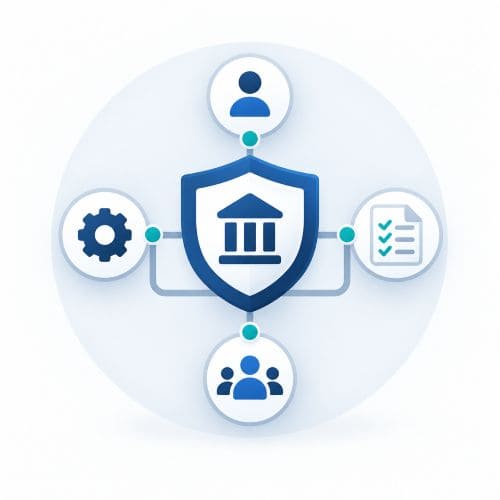
A useful governance system defines who can approve a new AI tool, what information may be used, which use cases require additional review, what evidence vendors must provide, who owns the final decision, and what happens when technology or business conditions change.
CAVA Suite AI Governance Setup is a structured engagement designed to build that operating system.
What the Engagement Solves
Organizations often reach a point where AI experimentation has moved faster than management controls.
Different departments may be using different tools. Vendor AI features may be appearing without formal review. Business leaders may want to move faster, while IT, legal, security, privacy, HR, finance, and procurement each see only part of the problem.
AI Governance Setup creates one coordinated framework for making those decisions.
The result is not simply a set of policies.
It is a repeatable management process.
What We Build
The complete governance package can include:
- AI strategy and current-state assessment
- AI system and use inventory
- Readiness assessment and gap register
- AI opportunity portfolio
- Initial business cases
- Governance charter
- Roles, RACI, and decision rights
- Risk classification and escalation rules
- Acceptable-use and generative-AI policies
- Data-handling and human-oversight standards
- AI use-case intake and approval process
- Vendor and procurement evaluation toolkit
- AI assurance and validation framework
- 12-month implementation plan
- Three-year AI roadmap
- Executive decision package
Each component is designed to connect to the others:
- A policy tells people what is allowed.
- The intake process determines how new ideas enter review.
- The risk model determines who must participate.
- The vendor toolkit defines what evidence is required.
- The roadmap turns governance into action.
How the Engagement Works
A typical Governance Setup engagement runs approximately 12 weeks.
The early phase focuses on current state, interviews, actual workflows, tools, data, readiness, and existing controls.
The middle phase develops use cases, business cases, governance structure, policy, intake, and vendor requirements.
The final phase establishes assurance requirements, implementation priorities, budget considerations, ownership, and the first-year roadmap.
The engagement ends with an executive handoff and editable working materials.
Designed to Transfer
The objective is not to make your organization permanently dependent on CAVA Suite.
The framework is designed so internal owners can operate it after handoff:
- Roles are assigned.
- Decision rights are documented.
- Forms are editable.
- Approval paths are clear.
- Owners know what they are responsible for.
What Is Not Included
Governance Setup does not automatically include software implementation, system integration, cybersecurity testing, legal opinions, full production validation, or long-term program management.
Those services can be scoped separately when needed.
Typical Engagement
Timeline: Approximately 12 weeks
Commercial model: Fixed-scope project
A representative example is approximately $50,000 for a standard single-organization engagement. Actual scope and pricing depend on complexity, size, industry, and existing controls.
Move from Policy to Management
Good AI governance should help the organization make better decisions, not simply slow people down.
The goal is controlled, measurable, accountable AI use.